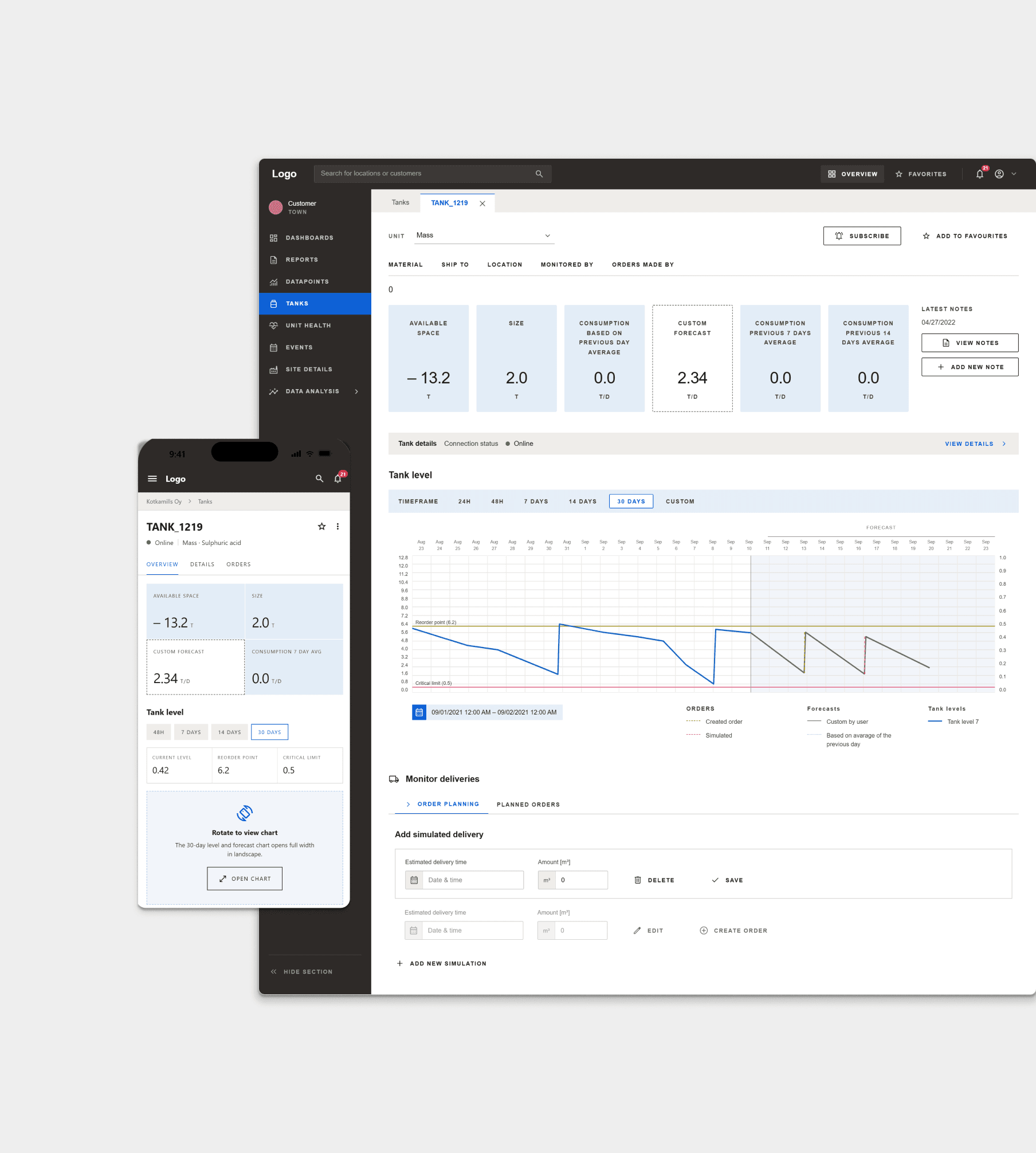
Industrial Data & Expert Interface Design
Built practical expert tools for industrial data workflows, making complex calculations and monitoring more reliable for specialists.
View case study →Case study
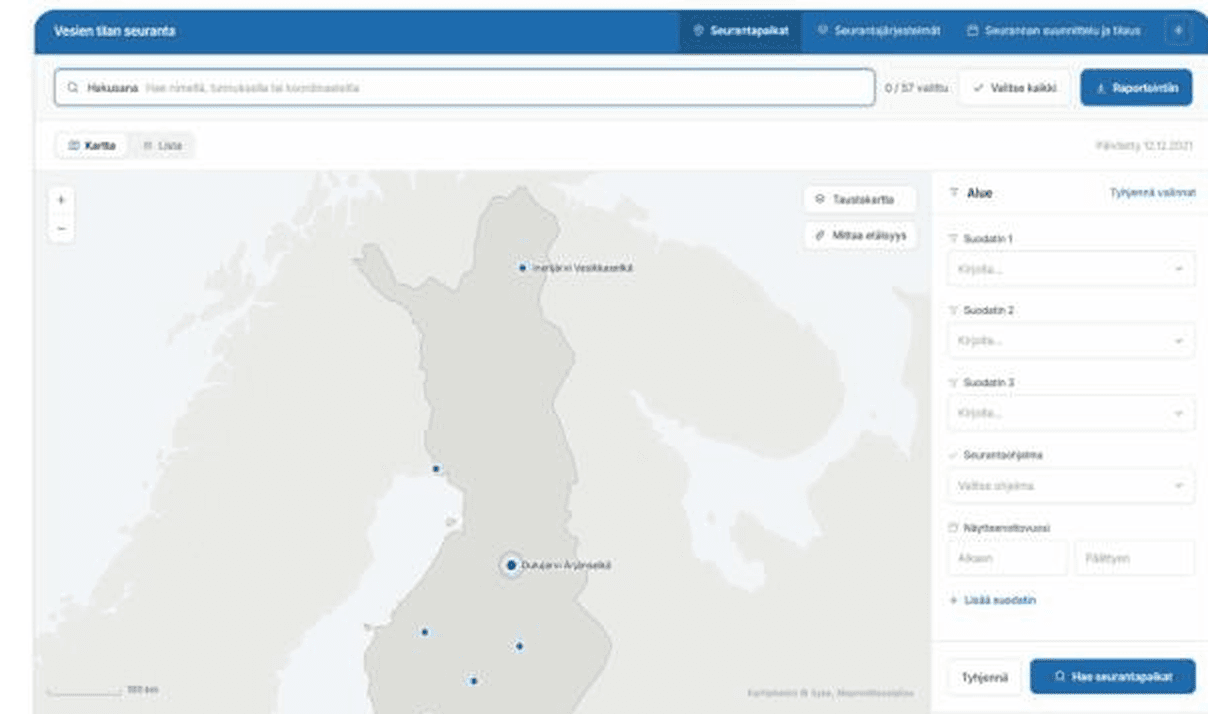
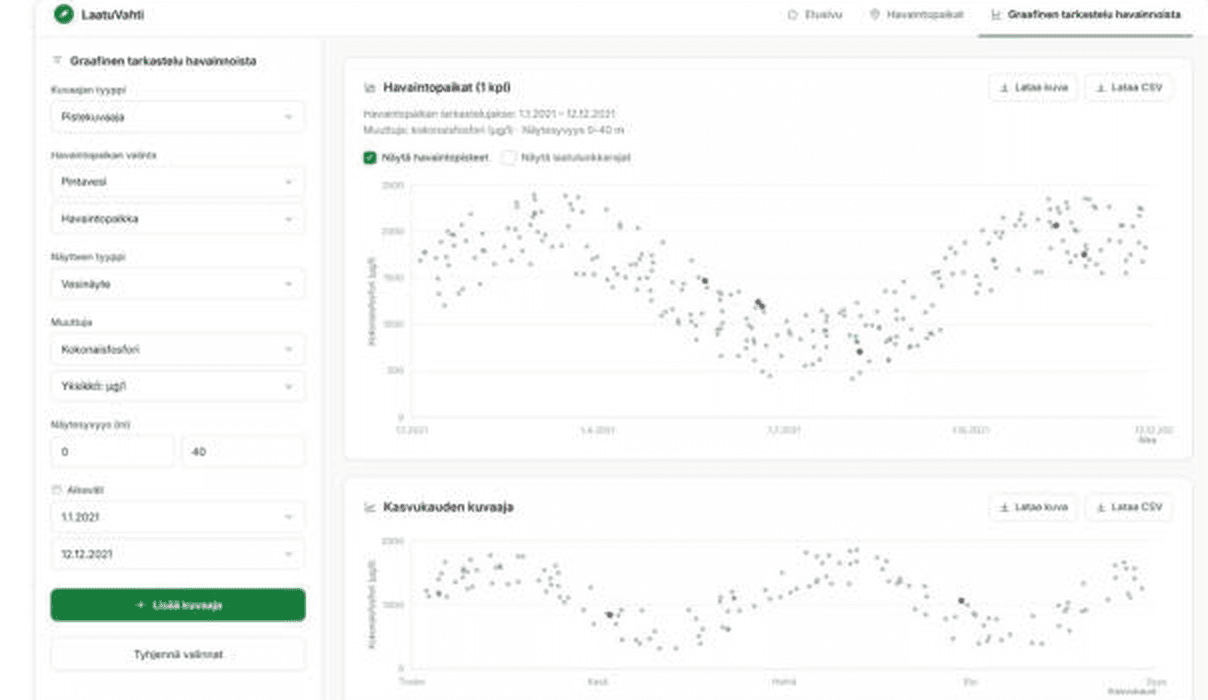
Data PlatformMonitoring and reporting tools for environmental data, built so specialists can find, compare and publish results without fighting the interface.
Role: UI/UX Designer (sole designer, long-term client relationship)
Focus: Modernizing legacy data systems, combining UX/UI design with lightweight service design
Starting Point
An environmental research institute relied on outdated tools to manage and analyze critical data, often defaulting to Excel just to make sense of it. Over several projects between 2020 and 2023, I was brought in as the institute's only UX designer to modernize these tools.
Selected screens
Desktop and mobile, one platform
The Impact
These impacts are based on feedback gathered directly from users during the projects.
Instead of just modernizing the look of old systems, we rebuilt several of them around how researchers actually work today, including how they combine map and table data, and how they add new results as their work continues.
In the largest of these projects, researchers had previously relied heavily on Excel to make sense of their data. We built proper analytics views directly into the system instead, giving them a much clearer, faster way to spot patterns and understand their data without exporting it elsewhere first.
The improved interfaces made everyday work noticeably easier for specialists. Saving new samples and tracking how they changed over time became much simpler than it was with the old systems.
How it started
Every system I worked on was outdated and needed to be rebuilt, but rarely as a like-for-like replacement. In most cases, we couldn't simply recreate the old system with a new interface. We had to rethink how the data and workflows should actually work, then build something new on top of that. For a couple of the projects, this meant starting with some lightweight discovery work myself, closer to a Lean Design approach, working directly with the system's specialists to gather the material needed before I could start on the actual interface.
Challenges & Problem-Solving
What I would do differently
Other case studies
Built practical expert tools for industrial data workflows, making complex calculations and monitoring more reliable for specialists.
View case study →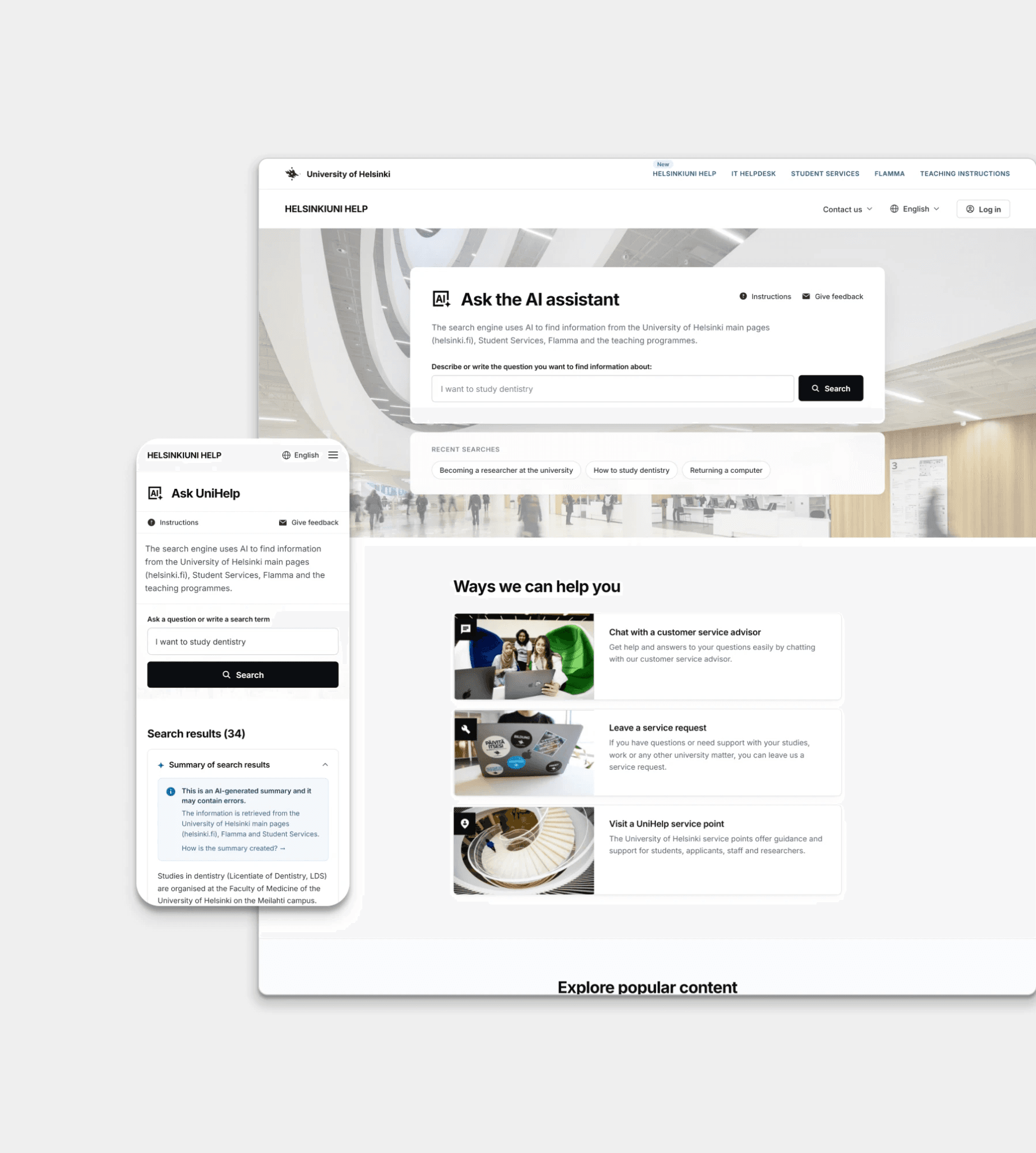
Designed a smarter search and service hub so students can find guidance and support without getting lost in fragmented systems.
View case study →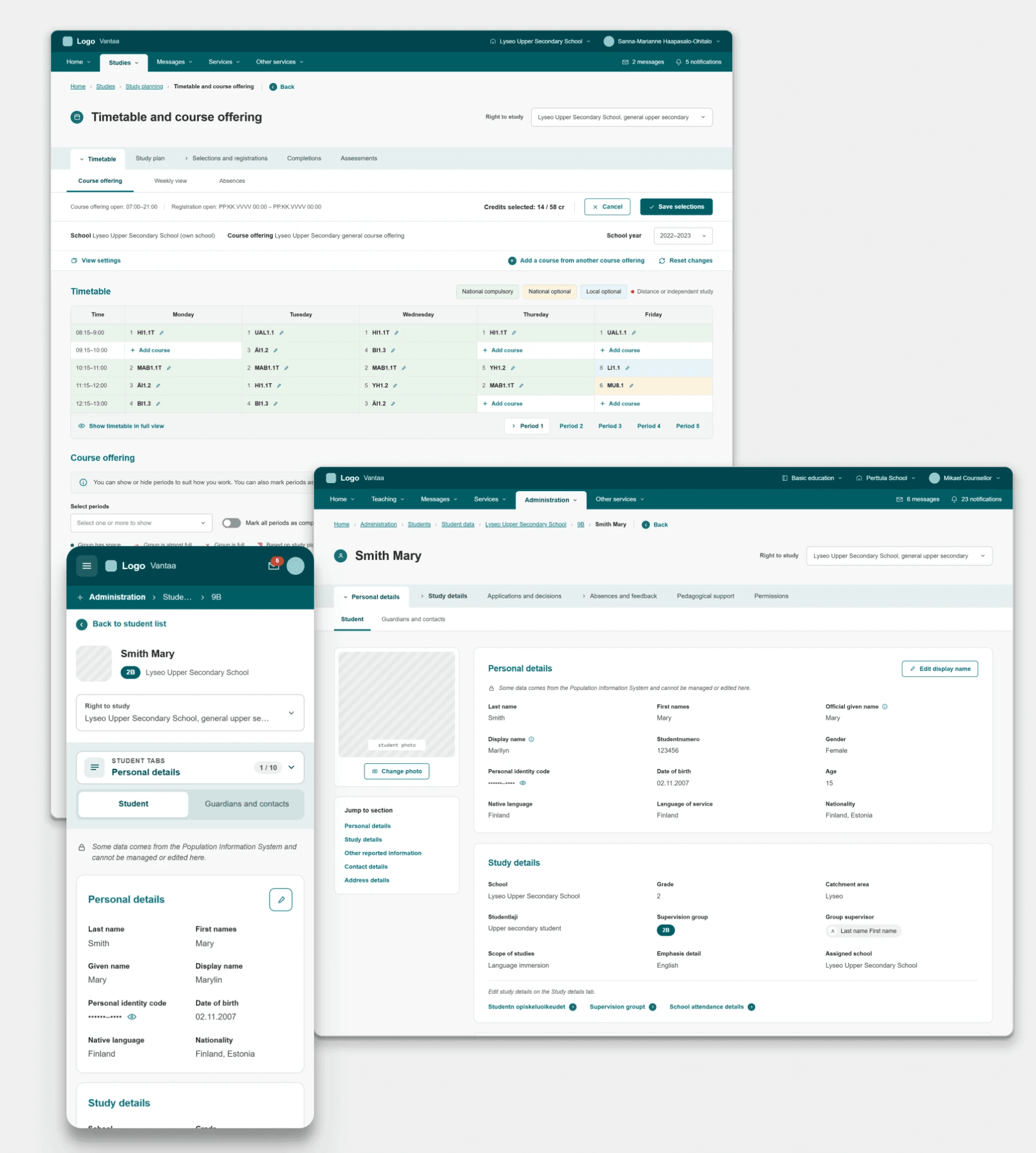
Brought structure to a massive public sector platform by uniting complex municipal school workflows into a clear, accessible tool for teachers and administrators.
View case study →Currently in process
A personal design system covering tokens, components and documentation, built to show how I structure and maintain a system end to end.
View case study →